
As moonlight softly fills the nursery night after night, nothing matters more than your baby’s safe, comfortable sleep. For newborns and infants, rest isn’t just downtime—it’s essential for brain development, physical growth, and emotional well-being. In modern parenting, the baby sleep sack has become a trusted companion for peaceful, secure slumber.
Why Choose a Baby Sleep Sack?
Traditional blankets, while cozy, can be kicked off easily or pose safety risks. The baby sleep sack offers a thoughtful alternative designed with both safety and comfort in mind:
-
Safety First: A sleep sack for baby keeps your little one securely wrapped without the risk of loose fabric covering their face, aligning with pediatric safe-sleep guidelines.
-
Temperature Regulation: A well-designed infant sleep sack helps maintain a comfortable body temperature, reducing nighttime awakenings due to overheating or chilling.
-
Freedom of Movement: Babies can stretch, kick, and move naturally in a baby sleeping sack while staying snug and warm throughout the night.
How to Choose the Right Baby Sleep Sack
1. Focus on Fabric Quality
Your baby’s delicate skin deserves the softest touch. Look for baby sleep sacks made from natural, breathable materials like organic cotton or bamboo fiber—gentle, hypoallergenic options that help regulate body temperature naturally.
2. Thoughtful Design Details
-
Secure Neck Opening: The perfect baby sleep sack has a neck opening that’s snug but comfortable—not too loose to slip into, nor too tight to restrict breathing or movement.
-
Practical Features: Two-way zippers or shoulder snaps make diaper changes easier without fully disturbing your baby’s sleep.
-
Safe Construction: Hood-free designs reduce overheating risks and follow current safe sleep recommendations for infant sleep products.
3. The Right Fit Matters
A properly fitted sleep sack for infants should be neither too big nor too small. Excess fabric can gather near the face, while a too-tight baby sleep bag limits healthy movement. Always match the sack size to your baby’s current height and weight.
4. Seasonal Considerations
-
Lightweight baby sleep sacks (0.5–1.0 tog) are ideal for summer
-
Medium-weight options (1.0–2.5 tog) work well for spring and fall
-
Warmer sleep sacks for babies (2.5–3.5 tog) provide cozy comfort during winter months

Tips for Using Your Baby Sleep Sack Safely
-
Dress your baby in light sleepwear inside the sleep sack—additional layers are usually unnecessary unless the room is particularly cool.
-
At 20–22°C (68–72°F), a onesie with a season-appropriate baby sleep sack creates the ideal sleep environment.
-
Regularly check your baby’s neck or back: it should feel warm but not sweaty or damp.
-
When your baby starts rolling over, ensure their sleep sack allows comfortable movement and doesn’t restrict development.
Transitioning from Sleep Sack to Blanket
As your baby grows—typically around 12–18 months—they may show signs of readiness for a blanket. You can gradually introduce a lightweight toddler blanket while maintaining a comfortable room temperature, making the transition from baby sleep sack to blanket gentle and natural.

Designed with Care: The Fiemol Difference
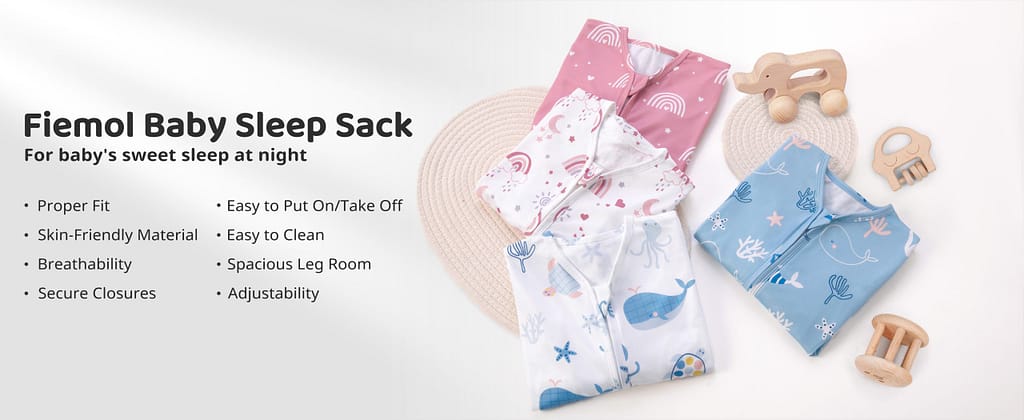
At Fiemol, we understand that every detail matters when it comes to your baby’s sleep. That’s why we’ve dedicated ourselves to perfecting the baby sleep sack—creating products that thoughtfully address how babies actually sleep, move, and grow.
Our sleep sacks for babies feature:
-
Breathable, premium fabrics carefully selected for delicate skin
-
Precision sizing that accommodates growth while maintaining safety
-
Intuitive designs that make nighttime routines simpler for parents
-
Season-appropriate options for year-round comfort
We listen to parents, observe babies’ needs, and continuously refine our baby sleep sacks to support your family’s journey with products that blend safety, comfort, and thoughtful design.
Because at Fiemol, we believe every baby deserves nights filled with peaceful sleep and mornings bright with possibility.
